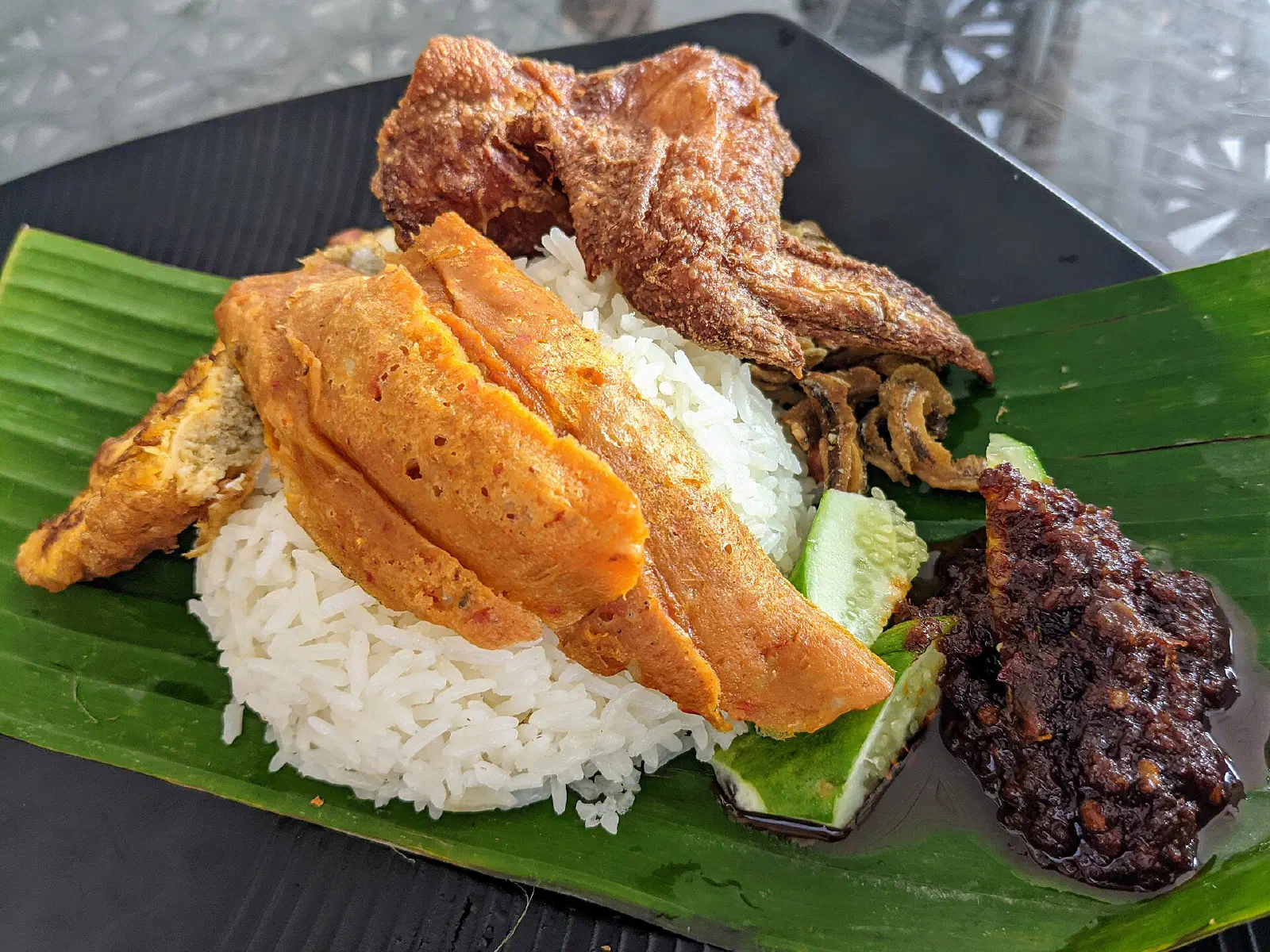
Photo: Jpatokal / Wikimedia Commons, CC BY-SA 4.0, cropped
Malaysian food: what to eat and how to order
A beginner's guide to Malaysian food: the dishes to try, how hawker centres work, how to order drinks like a local, and regional specialities.
On this page
Food is the best part of a trip to Malaysia, and you don’t need to spend much to eat well. Malay, Chinese, Indian and indigenous cooking have mixed here for generations, so even a simple food court has a huge range. Here’s what to try and how to get it.
Dishes to try first
| Dish | What it is |
|---|---|
| Nasi lemak | Coconut rice with sambal, fried anchovies, peanuts and egg. Often wrapped in a banana leaf |
| Roti canai | Flaky, chewy flatbread with dhal or curry, at mamak restaurants |
| Char kway teow | Flat rice noodles stir-fried in a very hot wok with prawns, egg and bean sprouts |
| Satay | Grilled meat skewers with peanut sauce |
| Laksa | Noodle soup in many regional styles, from sour assam laksa to rich curry laksa |
| Nasi kandar | Rice with a mix of curries poured over, a Penang speciality |
| Banana leaf rice | Rice with vegetable sides and curries served on a banana leaf |
| Rendang | Slow-cooked dry curry, usually beef, rich with coconut and spices |
| Hainanese chicken rice | Poached or roast chicken with rice cooked in chicken stock |
| Cendol | Shaved ice with coconut milk, palm sugar and green jelly |
Where to eat
- Hawker centres and food courts. Many stalls under one roof. Find a table, order from different stalls, and pay when your food arrives.
- Kopitiams. Traditional coffee shops, great for breakfast: kaya toast, soft-boiled eggs and strong coffee.
- Mamak restaurants. Indian-Muslim restaurants, many open 24 hours. The place for roti canai and teh tarik, and a late-night institution.
- Nasi campur stalls. A spread of dishes. You point at what you want, and the price depends on what you take.
- Night markets (pasar malam). Street food, snacks and drinks, set up in a different neighbourhood each night of the week.
How to order drinks like a local
Drink orders have their own lingo. Start with teh (tea) or kopi (coffee), then add:
| Add | Meaning |
|---|---|
| O | No milk (sweetened) |
| C | With evaporated milk instead of condensed milk |
| Kosong | No sugar |
| Kurang manis | Less sweet |
| Ais (or peng) | Iced |
So teh O ais kurang manis is iced black tea, less sweet. A plain teh or kopi comes with sweetened condensed milk. Other drinks to try: teh tarik (frothy “pulled” milk tea), Milo dinosaur (iced Milo with extra Milo powder on top), sirap bandung (pink rose syrup with milk) and fresh air kelapa (coconut water).
Halal, vegetarian and spice
- Halal. Most Malay and Indian-Muslim food is halal. Chinese restaurants often serve pork, so look for halal certification or a “no pork” sign if that matters to you.
- Vegetarian. Indian restaurants and banana leaf places have lots of vegetarian dishes. Chinese vegetarian restaurants (often near temples) do meat-free versions of classic dishes. Note that “vegetarian” dishes elsewhere may still include belacan (shrimp paste) or anchovies, so ask.
- Spice. Chilli usually comes on the side as sambal or cut chilli, so you can control the heat. Say tak nak pedas for “not spicy”.
Eating etiquette
- Eating with your right hand is normal at Malay and Indian places. Use the tap or bowl provided to wash first.
- Fork in the left hand, spoon in the right is the usual way to eat rice dishes.
- Tapau means takeaway. You’ll hear it everywhere.
- Tipping isn’t expected at hawker stalls.
Regional specialities
Every region has its own dishes, which is a great excuse to travel:
- Penang: assam laksa, char kway teow, nasi kandar
- Ipoh: white coffee, bean sprout chicken, kai si hor fun
- Melaka: Nyonya cooking, chicken rice balls
- Kuching: Sarawak laksa, kolo mee, layered cakes
- Kota Kinabalu: ngiu chap, hinava, seafood
- Kuala Lumpur: a bit of everything, plus KL Hokkien mee
Fruit and durian
Malaysia’s fruit is excellent: mangosteen, rambutan, mango, papaya and more. Then there’s the durian, “the king of fruits”, which people either love or hate. Its smell is strong enough that it’s banned in most hotels and on public transport, so eat it at a roadside stall. Durian season is usually around the middle of the year, with a smaller one late in the year.
On a budget? Our Kuala Lumpur on a budget guide has more tips on eating cheaply.
Keep reading

Guide
Getting around Malaysia: flights, trains, buses and more
How to travel around Malaysia by plane, train, bus, car and boat, with tips on booking, Grab, Touch 'n Go and getting to …

Guide
Malaysia packing list: what to bring and what to leave
What to pack for Malaysia: clothes for heat, rain and temples, the right plug, health and island essentials, and what …
Guide
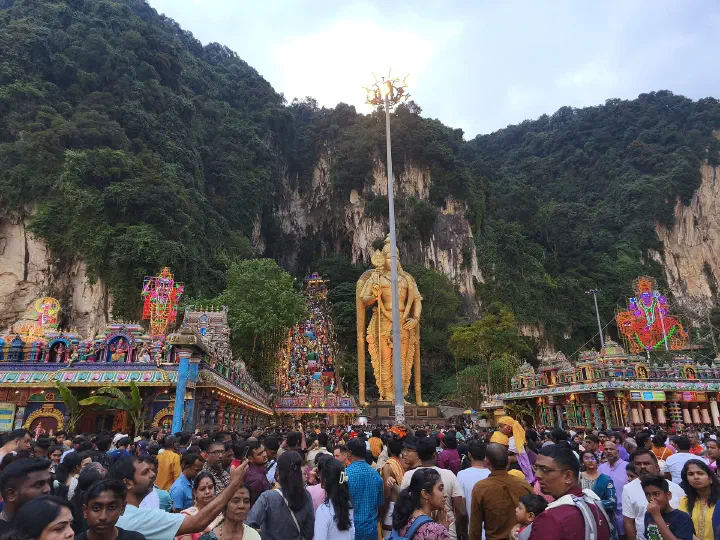
Malaysian festivals: a year of celebrations
Chinese New Year, Hari Raya, Thaipusam, Deepavali, Gawai and more: what Malaysia's big festivals are, when they happen …