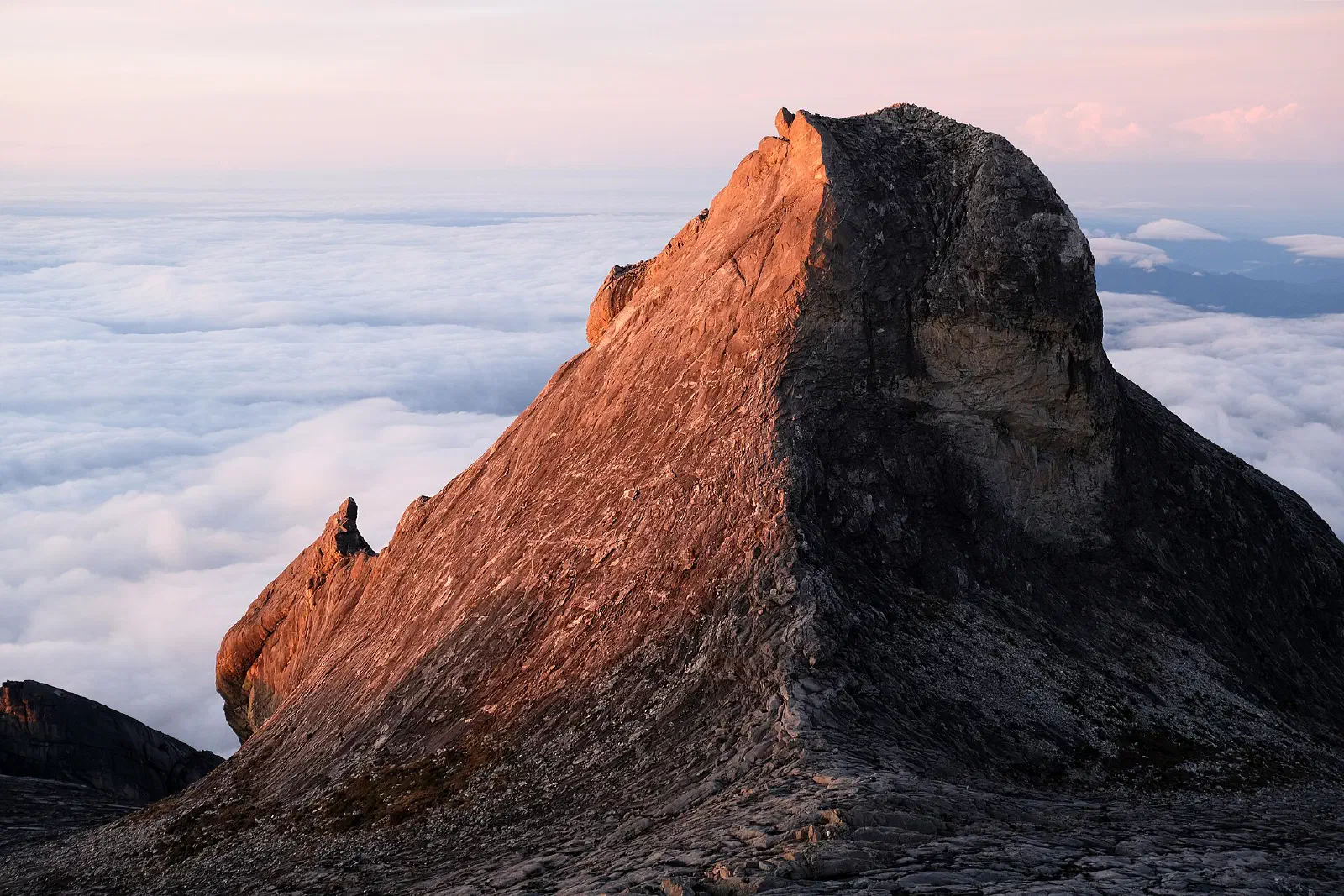
Photo: kallerna / Wikimedia Commons, CC BY-SA 4.0, cropped
Climbing Mount Kinabalu: a first-timer's guide
How to plan a Mount Kinabalu climb: permits and guides, what the two days are like, fitness, altitude, what to pack and the best time to go.
On this page
Mount Kinabalu in Sabah is the highest mountain in Malaysia, at just over 4,000 metres. Thousands of people climb it every year, and you don’t need technical climbing skills. You do need a decent level of fitness, good planning, and a booking well in advance. Here’s how it works.
How the climb works
The climb is usually done over two days, with a night on the mountain:
- Day 1: Start at Kinabalu Park headquarters, then begin the climb at Timpohon Gate. It’s a long, steady climb on steps and rocky trail through changing forest, up to the mountain huts at Laban Rata/Panalaban. You’ll arrive in the afternoon, eat, and go to bed early.
- Day 2: Wake up in the middle of the night and set off in the dark to reach the summit, Low’s Peak, around sunrise. The top section is bare granite, with fixed ropes in places. Then it’s back down to the huts for breakfast and the long descent to the bottom.
Some packages add a night at the park before or after the climb, which is a good idea for acclimatising and resting.
Permits and guides
- You need a climbing permit and a licensed mountain guide. You can’t climb independently.
- Spaces are limited by the number of beds on the mountain, so book months ahead, especially for school holidays and weekends.
- Packages usually include the permit, guide, accommodation on the mountain, meals and insurance. Book through a licensed operator, and check exactly what’s included.
How hard is it?
It’s tough but doable for most reasonably fit people. The difficulty is the steady, steep climbing, the altitude, and the cold, wet weather near the top.
- Train beforehand. Stair climbing, hill walking and cardio help a lot.
- Altitude. Some people get headaches, nausea or shortness of breath near the top. Go slowly, drink water, and tell your guide if you feel unwell. Descending is the cure for serious symptoms.
- Weather can stop you. Guides may halt the summit attempt for heavy rain, wind or safety reasons. It happens, and it’s not their choice to make lightly.
- Health. If you have heart, lung or other health conditions, check with a doctor first.
What to pack
- Warm layers: thermal top, fleece and a windproof, waterproof jacket
- Gloves, a warm hat and a headlamp (with spare batteries) for the summit push
- Good hiking shoes with grip, and a change of socks
- Rain cover for your bag
- Snacks and a water bottle
- Sunscreen and sunglasses
- Any personal medication
Porters can carry extra gear for a fee, but pack light.
Where to stay before and after
Stay at or near Kinabalu Park, or in Kundasang nearby, the night before. It’s cooler, closer to the start, and helps you adjust to the altitude. After the climb, Kundasang’s mountain views and dairy farms make a relaxing recovery.
Compare places to stay in Kundasang Browse Mount Kinabalu packages
When to go
You can climb all year, but the drier months, roughly from March to August, usually give the best chance of clear views. It’s always cold at the summit, whatever the season.
Getting there
Fly to Kota Kinabalu, then it’s a couple of hours by road to Kinabalu Park. Most packages include transfers. Bring your passport, since Sabah runs its own immigration checks.
Keep reading
Pahang
Cameron Highlands tea estates: a visitor's guide
How to visit the tea estates of the Cameron Highlands: which ones to see, how tea is made, the best time of day, and …
Pahang
Fraser's Hill
A quiet, cool colonial hill station two hours from KL, with misty forest trails, Tudor-style bungalows and some of …

Guide
Getting around Malaysia: flights, trains, buses and more
How to travel around Malaysia by plane, train, bus, car and boat, with tips on booking, Grab, Touch 'n Go and getting to …