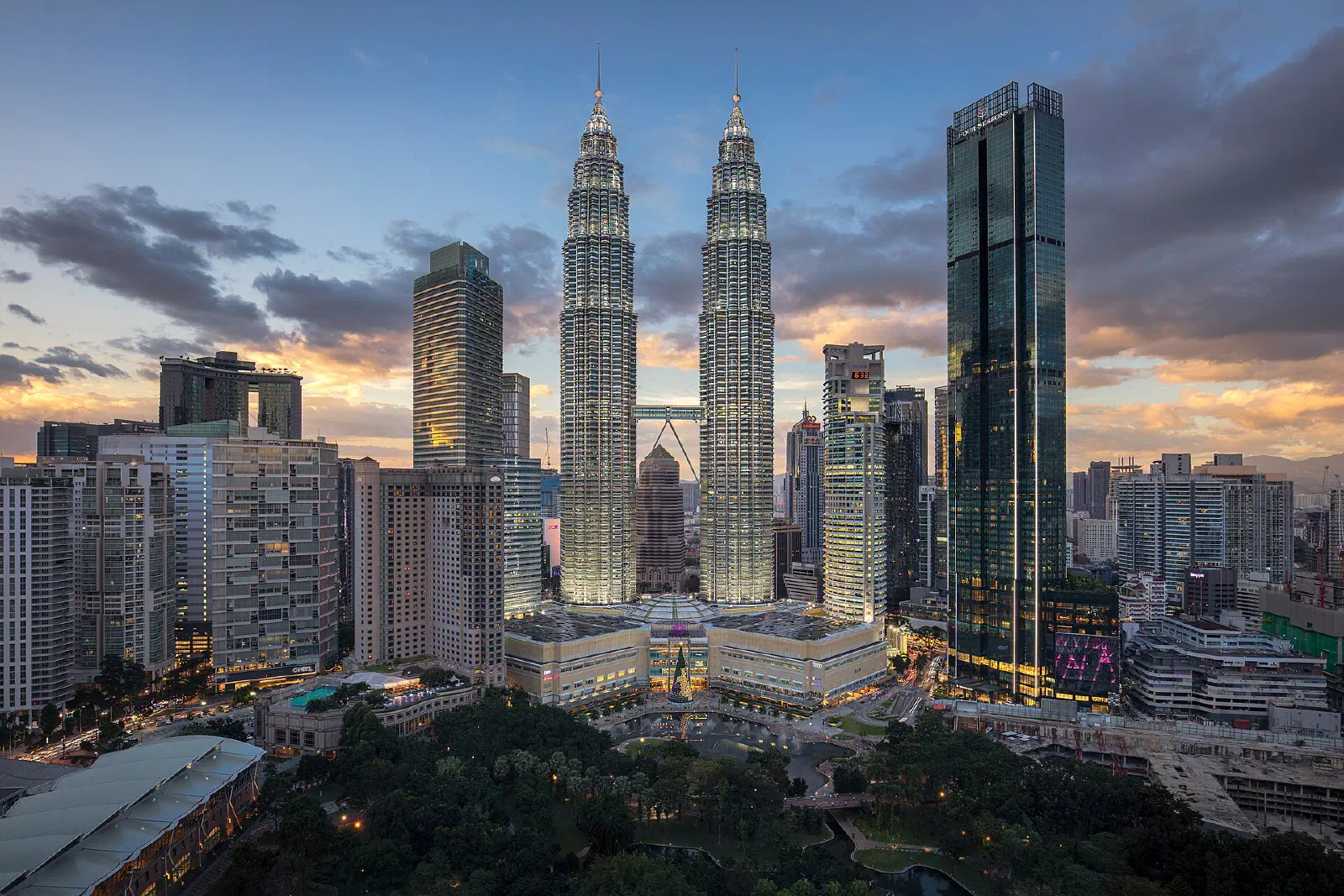
Photo: James Kerwin / Wikimedia Commons, CC BY 2.0, cropped
Kuala Lumpur
Twin Towers, Batu Caves, old Chinatown and some of the best food in the country. How to get the most out of Malaysia's capital.
On this page
Most trips to Malaysia start in Kuala Lumpur, and plenty of people rush straight through. That’s a shame. KL is loud, hot and a bit chaotic, but it’s also one of the easiest big cities in Asia to get around, and the food alone is worth a few days.
Why go
- The mix. Malay, Chinese and Indian neighbourhoods sit right next to each other, so you can go from a mosque to a Taoist temple to a Hindu shrine in one short walk.
- The food. Hawker stalls, mamak shops open all night, and night markets all over the city.
- The hub. KLIA is the main international airport, and trains, buses and budget flights fan out from here to the rest of the country.
What to do
Petronas Twin Towers and KLCC Park
The towers are the postcard shot. Going up to the skybridge needs a ticket booked ahead, but the free option is just as good: walk around KLCC Park at dusk and stay for the light-up. There’s a fountain show on the lake in front of the Suria KLCC mall in the evenings.
Batu Caves
A huge limestone hill on the northern edge of the city, with a Hindu temple inside the main cave. You climb a long, steep and colourful staircase past a giant golden statue of Lord Murugan. Go early, before the heat and the tour groups. Watch your bags and snacks around the monkeys.
Merdeka Square and the old colonial core
Merdeka Square is where Malaysia’s independence was declared in 1957. Around it you’ll find the Sultan Abdul Samad Building, with its copper domes and clock tower, and a cluster of colonial-era buildings. It’s a short walk from here to Masjid Jamek, one of the city’s oldest mosques, at the meeting point of two rivers. The city got its name from that spot (“muddy confluence”).
Chinatown and Petaling Street
Petaling Street is touristy, but the streets around it are the real draw: old shophouses, Sri Mahamariamman Temple, Guan Di Temple, the restored Kwai Chai Hong lane, and Central Market (Pasar Seni) for crafts.
Bukit Bintang and Jalan Alor
The shopping and nightlife district. Come for the malls, stay for Jalan Alor, a street of open-air restaurants and food stalls that comes alive after dark.
Green escapes
When the city gets too much, head to the Perdana Botanical Gardens or KL Forest Eco Park, a patch of rainforest right in the middle of the city with a canopy walk.
What to eat
| Dish | What it is |
|---|---|
| Nasi lemak | Coconut rice with sambal, fried anchovies, peanuts and egg. The unofficial national dish |
| Roti canai | Flaky flatbread with dhal or curry, best at a mamak shop |
| Banana leaf rice | Rice and vegetable curries served on a banana leaf, eaten with your right hand if you’re brave |
| KL Hokkien mee | Thick noodles fried in dark soy sauce with pork lard. Nothing like the Penang version |
| Bak kut teh | Herbal pork rib soup, a breakfast favourite from nearby Klang |
| Satay | Grilled skewers with peanut sauce, cucumber and rice cakes |
Kampung Baru, a Malay village surrounded by skyscrapers, is great for Malay food in the evening. Brickfields (Little India) is the place for banana leaf rice.
Getting there and around
- From the airport: KLIA and KLIA2 are about an hour south of the city. The KLIA Ekspres train is the quickest way into KL Sentral, airport buses are the cheapest, and Grab works too.
- Trains: The LRT, MRT, monorail and KTM Komuter lines cover most places you’ll want to go. Get a Touch ’n Go card and you can tap through all of them.
- Buses: The GO KL City Bus loops around the centre. Check the current routes on the operator’s site.
- Grab: Cheap, easy, and fixed-price, so nobody has to haggle. Traffic is bad at rush hour, so take the train if it goes your way.
- Walking: Fine within one area, but KL isn’t built for walking between districts. Pavements come and go, and it’s hot.
Where to stay
- Bukit Bintang: Central, lots of food and nightlife, good for a first visit.
- KLCC: Near the Twin Towers. Nicer hotels, quieter at night.
- Chinatown: Cheaper, lots of character, and walking distance to the old town.
When to go
KL is hot and humid all year, with afternoon thunderstorms most days that usually pass quickly. Plan outdoor stuff for the morning and save malls and museums for the afternoon. Festivals like Chinese New Year, Hari Raya, Deepavali and Thaipusam (at Batu Caves) are great to see, but transport and hotels fill up, so book ahead.
On a tight budget? See our guide to Kuala Lumpur on a budget.
Keep reading
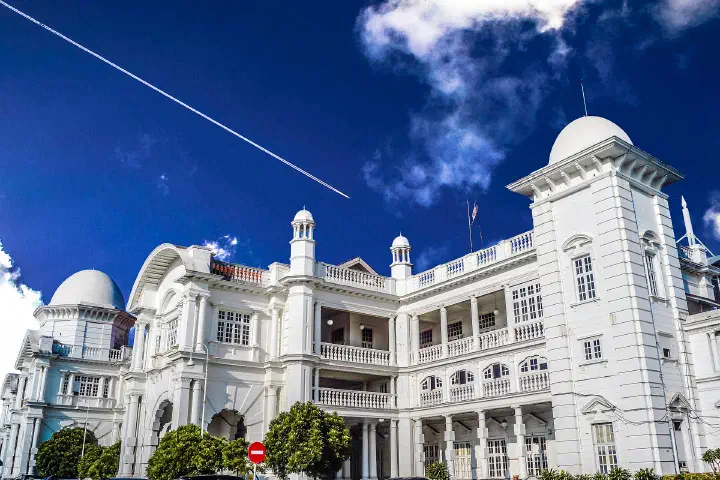
Northern Malaysia
Ipoh
Old town murals, cave temples in limestone hills, and famous food: white coffee, bean sprout chicken and silky hor fun. …
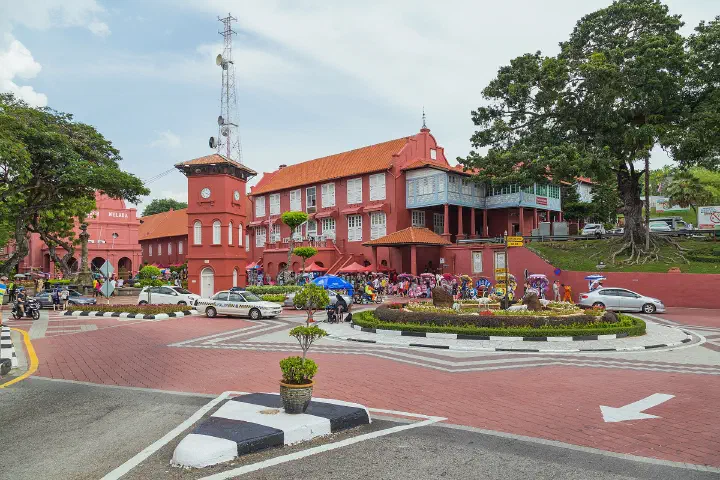
Southern Malaysia
Melaka
Malaysia's historic port city: Dutch and Portuguese ruins, Peranakan food, and the Jonker Street night market.
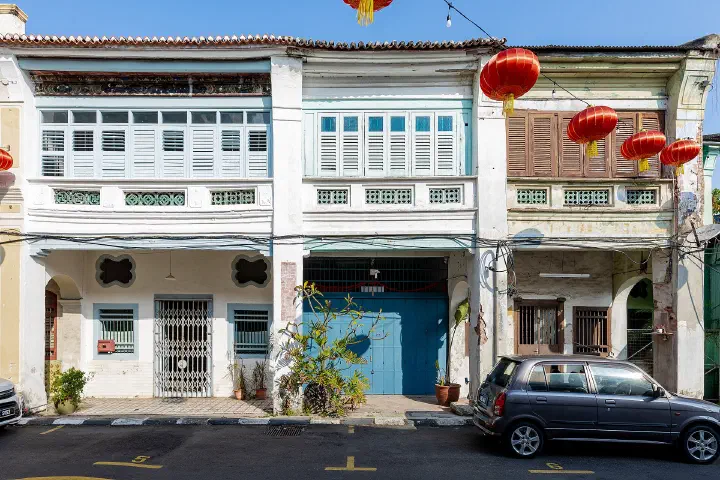
Northern Malaysia
Penang
Street food, street art and the old shophouses of George Town, plus beaches and hills when you need a break from the …